We remain fully operational. Our teams are working around the clock to ensure your deliveries continue safely.

DOWNLOAD THE APP


Copyright © 2025 Desertcart Holdings Limited
DOWNLOAD THE APP
Buy anything from 5,000+ international stores. One checkout price. No surprise fees. Join 2M+ shoppers on Desertcart.
Desertcart purchases this item on your behalf and handles shipping, customs, and support to Solomon Islands.
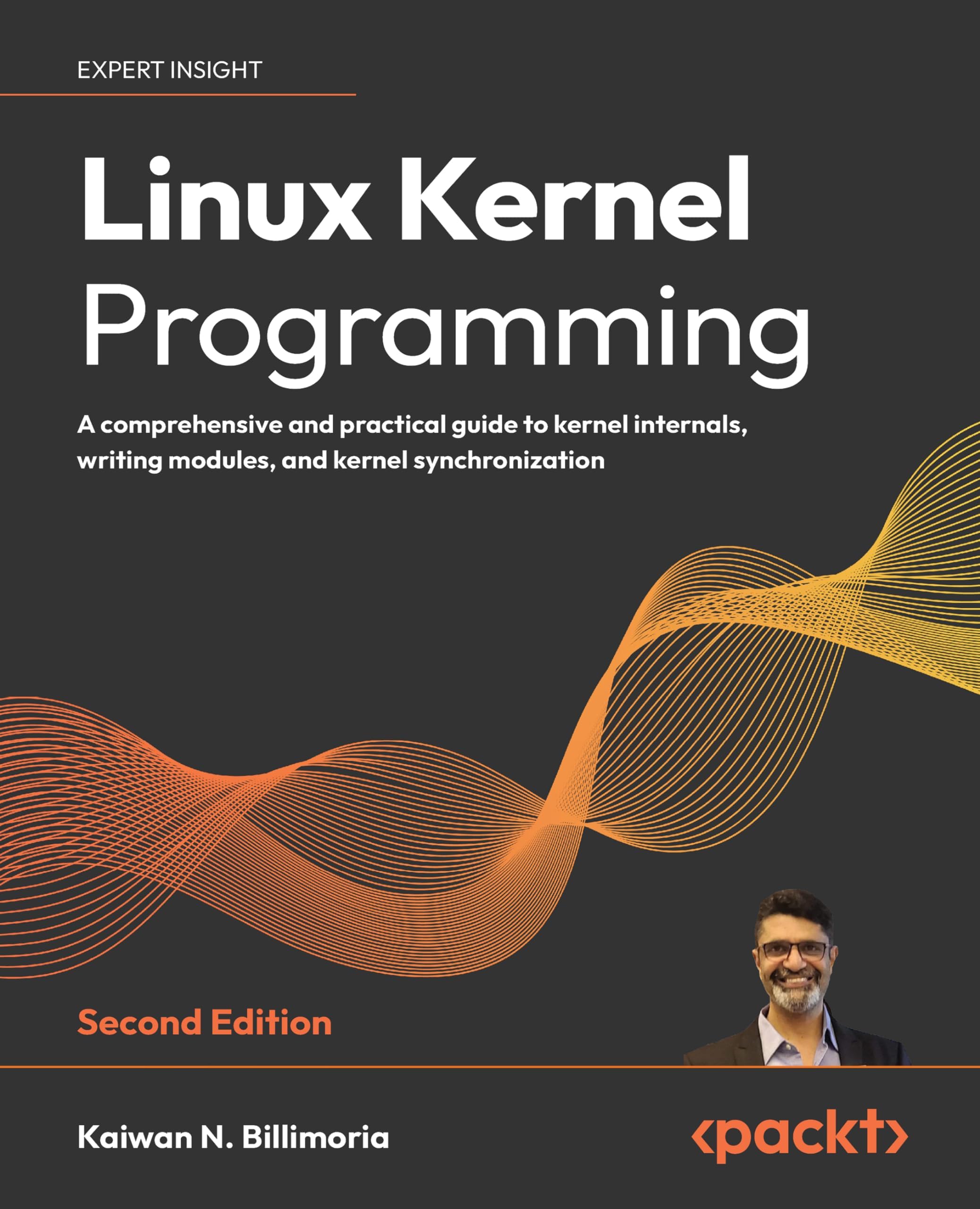
Linux Kernel Programming: A comprehensive and practical guide to kernel internals, writing modules, and kernel synchronization [Kaiwan N. Billimoria] on desertcart.com. *FREE* shipping on qualifying offers. Linux Kernel Programming: A comprehensive and practical guide to kernel internals, writing modules, and kernel synchronization Review: The best on the subject since LDD3 - I found this book as impacting me as LDD (by Rubini etc) has been in its days, a de-facto standard established to the point that people keep searching for LDD4/LDD5 to these days, that much desirable. Since LDD3 the last update on 2.6, this book (as well as kernel debugging and hands-on systems programming) is a valuable source of information for modern kernels 5 and 6 for a few years to come. Knowledgeable and easy to follow, captivating attention to keep on reading it through, impressive for a technical book. LDD4+ has now found reincarnated, thank you very much for all the effort composing it! Review: Compelling, informative, and accurate - I really could not be happier with the pace and level of detail this book provides. I am a very surface-level Linux user and I wanted to dive in head first. I often find that when I learn about something that I consider really hard or intimidating in tech, I get better at day-to-day use of the tools and my confidence grows. This book is a real confidence-booster if you crave the knowledge of how things work under the hood.







| Best Sellers Rank | #92,539 in Books ( See Top 100 in Books ) #5 in Linux & UNIX Administration (Books) #6 in Linux Programming #12 in Linux Networking & System Administration |
| Customer Reviews | 4.5 4.5 out of 5 stars (56) |
| Dimensions | 7.5 x 1.87 x 9.25 inches |
| Edition | 2nd ed. |
| ISBN-10 | 1803232226 |
| ISBN-13 | 978-1803232225 |
| Item Weight | 3.07 pounds |
| Language | English |
| Print length | 826 pages |
| Publication date | February 29, 2024 |
| Publisher | Packt Publishing |
J**T
The best on the subject since LDD3
I found this book as impacting me as LDD (by Rubini etc) has been in its days, a de-facto standard established to the point that people keep searching for LDD4/LDD5 to these days, that much desirable. Since LDD3 the last update on 2.6, this book (as well as kernel debugging and hands-on systems programming) is a valuable source of information for modern kernels 5 and 6 for a few years to come. Knowledgeable and easy to follow, captivating attention to keep on reading it through, impressive for a technical book. LDD4+ has now found reincarnated, thank you very much for all the effort composing it!
N**K
Compelling, informative, and accurate
I really could not be happier with the pace and level of detail this book provides. I am a very surface-level Linux user and I wanted to dive in head first. I often find that when I learn about something that I consider really hard or intimidating in tech, I get better at day-to-day use of the tools and my confidence grows. This book is a real confidence-booster if you crave the knowledge of how things work under the hood.
W**G
Great book to read
Great book to keep you updated about upstream Linux
S**N
An Essential Guide for Mastering Linux Kernel Development
Linux Kernel Programming - Second Edition: A Comprehensive and Practical Guide to Kernel Internals, Writing Modules, and Kernel Synchronization is an outstanding resource for anyone eager to understand the inner workings of the Linux kernel. Whether you're a beginner looking to get started or an experienced developer aiming to deepen your knowledge, this book delivers a well-structured and hands-on approach to kernel programming. The book starts with the fundamentals—setting up a kernel development environment, understanding kernel release nomenclature, and compiling the 6.x Linux kernel from source. As you progress, it dives into advanced topics such as kernel configuration, writing and debugging loadable kernel modules (LKMs), kernel synchronization mechanisms, memory management, CPU scheduling, and much more. Each chapter builds on practical examples, ensuring that readers not only understand the theory but also learn how to apply it in real-world scenarios. One of the book's biggest strengths is its focus on practical application. From exploring the kernel build process and bootloader configurations to working with Git for kernel development and troubleshooting system crashes using debugging tools, the book provides step-by-step guidance. The coverage of kernel synchronization techniques—including spinlocks, mutexes, and RCU—makes it an invaluable reference for those dealing with concurrent programming in the kernel space. Whether you're an aspiring kernel developer, a DevOps engineer, or a systems programmer, this book is a must-have. The clear explanations, well-structured content, and hands-on exercises make it a perfect companion for anyone wanting to go from a beginner to an expert in Linux kernel programming. Highly recommended for anyone serious about understanding and working with the Linux kernel!
C**E
Broad, detailed and comprehensible book on Linux Kernel Programming
I got on my desk a copy of "Linux Kernel Programmin (2E)" by Kaiwan N. Billimoria and will shortly mention what this book is about. It is a book that you can read cover-to-cover to have a better understanding of kernel development, but I see also how it can be used as a reference when you are going to throw C code at your compiler and build a linux kernel. There is a number of scenario why you might want to do that: - You are recompiling the kernel for a new machine that needs better support - You are going to implement a kernel module and you need some context - You are going to work on the kernel yourself While all of those use-cases for the book are technically a fit, apart from gaining some higher understanding I see the most out of it if you are going to code on the kernel itself. There you have everything that is needed. You can go back and forth between your code and the book, and still learn by doing. What mostly impressed me is the breath of the topics: the chapter about writing a config file for the kernel enlists a total of seven (7!) different strategies to get started with a configuration file for your kernel. Also a lot of side tools are mentioned to help out with kernel development and debugging. Quite some module development can be in theory done without fully understanding the details of the kernel itself, but the deeper you reach, the more you will need the details that are well discussed in the book. Memory allocation, CPU scheduling algorithms, the book does not try to save words and describe in detail and plain language most things there is to know, not sparing plenty of references to other books and articles. Also, the material is up-to-date with the latest kernel.
R**P
Very good reference with updates for Kernel 6.x
This is a good book for experienced programmers who are trying to gain familiarity with the Linux Kernel’s structure. It goes into a lot of background about building and understanding the kernel build process and then some extended detail on memory, process and synchronization management. It doesn’t go into everything but no book does. All in all a good investment of time and pretty up to date.
F**F
Sysadmin book, not a kernel dev book
The title is misleading. There is less about the kernel code itself and more about system administration. (Esp around the scheduler and cgroups). Not a bad book, but if you're looking to learn about the kernel and how it works (which would require going through kernel code) try something else.
G**E
Ottimo libro
D**A
Excellent, deeply and clearly explained, even giving you more adicional information to research about topics, heading you to where and how develop it
P**A
I could give 10 star if possible.
B**O
Sehr gutes Buch für alle, die tiefer in die aktuelle Linux Kernel- und Treiberprogrammierung mit vielen Beispielen einsteigen wollen. Beim Kauf des Buches (Hardcopy) bekommt man gratis die PDF-Version dazu.
S**I
Anyone can, with some help, write a script to create a kernel. But without understanding what is happening and why, this book does not give you that knowledge. It is full of filler and meaningless talk, as if it were the hallucination of an old AI bot.and many links some refers to , are not working and seem to be missing and unsafe.
Trustpilot
2 weeks ago
1 week ago